
Table of Contents
ToggleElectric vehicles vs gas cars, it’s a debate that shapes how millions of drivers choose their next ride. With EV sales climbing and gas prices fluctuating, the decision isn’t as simple as it once was. Both options come with distinct advantages and trade-offs. This comparison breaks down the key factors: ownership costs, environmental impact, performance, and daily convenience. By the end, readers will have a clear picture of which option fits their lifestyle, budget, and values.
Key Takeaways
- Electric vehicles vs gas cars often favors EVs in long-term costs, with owners saving $6,000–$10,000 over 10 years thanks to lower fuel and maintenance expenses.
- EVs produce zero tailpipe emissions and generate 50–70% fewer lifetime emissions than gas cars, even when accounting for electricity generation.
- Electric vehicles deliver instant torque and faster acceleration, while gas cars still hold advantages in towing capacity and long-distance highway driving.
- Home charging eliminates gas station trips for EV owners, adding 25–30 miles of range per hour with a Level 2 charger.
- Federal tax credits up to $7,500 and state rebates can significantly offset the higher upfront cost of electric vehicles vs gas cars.
- Charging infrastructure is expanding rapidly, but gas stations remain more accessible for spontaneous road trips and drivers without home charging options.
Cost of Ownership Over Time
The electric vehicles vs gas cars debate often starts with price tags. Yes, EVs typically cost more upfront. The average new electric vehicle in 2024 ran about $56,000, while comparable gas cars averaged around $48,000. But sticker price tells only part of the story.
Fuel costs favor EVs significantly. Charging an electric vehicle costs roughly $0.04 per mile in most U.S. markets. Gas cars average $0.12 to $0.15 per mile at current pump prices. For someone driving 12,000 miles annually, that’s a difference of $960 to $1,320 each year.
Maintenance adds another layer. Electric vehicles have fewer moving parts, no oil changes, no transmission fluid, no spark plugs. Brake pads last longer too, thanks to regenerative braking. Consumer Reports estimates EV owners spend about 50% less on maintenance over a vehicle’s lifetime.
Tax incentives sweeten the deal for electric vehicles vs gas cars. Federal credits up to $7,500 remain available for qualifying EVs purchased in 2025. Many states offer additional rebates ranging from $1,000 to $5,000.
Insurance costs run slightly higher for EVs, typically 10-15% more than gas equivalents. Repairs can be pricier when accidents happen, largely due to battery concerns.
Over a 10-year ownership period, electric vehicles often come out ahead financially. A 2023 study from the Department of Energy found total ownership costs for popular EVs were $6,000 to $10,000 lower than comparable gas models. The math works especially well for drivers who cover high mileage annually.
Environmental Impact and Emissions
Environmental concerns drive many buyers toward electric vehicles vs gas cars. The difference in emissions is substantial, and it starts at the tailpipe.
Gas cars emit an average of 4.6 metric tons of carbon dioxide per year. Electric vehicles produce zero direct emissions. They don’t burn fuel, so they release no exhaust gases while operating.
But what about the electricity that powers EVs? This matters. In regions using coal-heavy power grids, EVs still produce indirect emissions through electricity generation. But, even in these areas, EVs typically generate 50-70% fewer lifetime emissions than gas cars.
The U.S. grid grows cleaner each year. Renewable energy sources now account for over 20% of electricity generation, up from 10% a decade ago. As solar and wind expand, the environmental advantage of electric vehicles vs gas cars widens.
Battery production raises valid concerns. Manufacturing lithium-ion batteries requires mining raw materials and uses considerable energy. Studies show this “carbon debt” gets repaid within 6 to 18 months of typical driving, after which EVs maintain their emissions advantage.
End-of-life considerations favor EVs too. Batteries can be recycled or repurposed for energy storage. Gas cars leave behind fluids, filters, and components that require careful disposal.
Air quality improvements from EVs benefit public health directly. Reduced tailpipe emissions mean less smog, fewer respiratory issues, and cleaner air in urban areas. Los Angeles, a city historically plagued by smog, has seen measurable air quality gains as EV adoption increases.
Performance and Driving Experience
Performance separates electric vehicles vs gas cars in ways that surprise many drivers. EVs deliver instant torque. Press the accelerator, and power arrives immediately. No waiting for engines to rev or transmissions to shift.
This instant response makes EVs feel quick, even in budget models. A standard Tesla Model 3 hits 60 mph in about 5.8 seconds. Comparable gas sedans often take 7-8 seconds. High-performance EVs like the Tesla Model S Plaid reach 60 mph in under 2 seconds, faster than nearly any production gas car.
Gas cars offer their own advantages. They typically provide better range per “fill-up.” A full gas tank delivers 300-400 miles easily. Many EVs now match this, but some budget models still top out around 200-250 miles.
Driving feel differs between electric vehicles vs gas cars. EVs run quieter. Some drivers love the silence: others miss engine sounds. Several manufacturers now add artificial engine noise to satisfy traditionalists.
Weight distribution in EVs tends toward optimal. Batteries sit low in the chassis, creating a lower center of gravity. This improves handling and reduces body roll in corners.
Gas cars maintain advantages in towing and sustained high-speed driving. Towing heavy loads drains EV batteries quickly, cutting range by 30-50%. Long highway trips at 80+ mph affect EV efficiency more than gas vehicles.
One-pedal driving in EVs takes adjustment but wins converts. Lifting off the accelerator engages regenerative braking, slowing the car while recharging the battery. Many EV owners rarely touch their brake pedals in normal driving.
Charging vs Fueling Convenience
Convenience often determines whether electric vehicles vs gas cars make sense for individual buyers. The refueling experience differs dramatically between the two.
Gas stations are everywhere. The U.S. has roughly 150,000 gas stations, making fill-ups easy anywhere. A typical stop takes 5-10 minutes. This infrastructure took over a century to build.
EV charging networks are growing fast but remain less extensive. About 60,000 public charging stations operate across the country, with numbers increasing monthly. Tesla’s Supercharger network leads in reliability and speed.
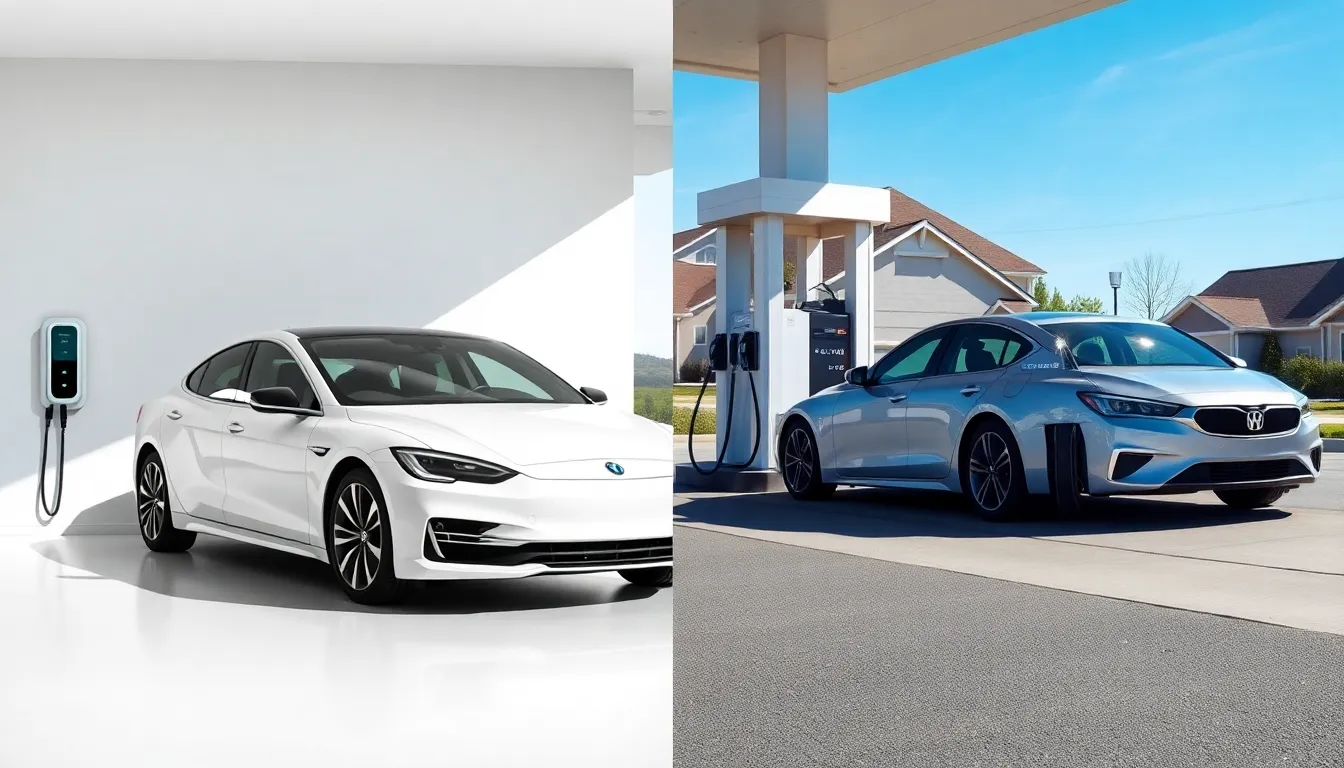
Home charging changes the equation for electric vehicles vs gas cars. EV owners with garages can plug in overnight and wake up to a full “tank” daily. This eliminates gas station trips entirely for local driving. A Level 2 home charger adds about 25-30 miles of range per hour of charging.
Public fast charging has improved significantly. DC fast chargers can add 200+ miles of range in 20-30 minutes. Networks like Electrify America and ChargePoint continue expanding coverage along major highways.
Apartment dwellers and those without dedicated parking face challenges. Public charging becomes a necessity, and planning around charger availability adds friction to the ownership experience.
Road trips require more planning with EVs. Apps like PlugShare help locate chargers, and most EVs include route planning that factors in charging stops. Still, gas cars offer undeniable spontaneity for long-distance travel.
Charging costs vary widely. Home charging typically costs $0.10-0.15 per kWh. Public fast charging runs $0.30-0.50 per kWh, narrowing the cost gap with gas in some situations.


